
Love, Choice and Listening: Tips for reducing frustration in the design process
- Chrissy Clary

- Jan 9, 2021
- 2 min read
Updated: 1 day ago
I managed an employee once who diligently worked on each design and architecture plan. She functioned as a part architect and part UX strategist for the team. Working from home, she would spend hours perfecting one unadulterated proposal. The problem came in when she would present her plan to the customer.
The meetings dissolved into an agitated debate over best practices and customer wants. Often she had not spent much time hashing out needs and wants of the customer. Instead, she trusted only what she learned from books and experts.
She would become agitated with the customer and their stupidity. How could they not realize the gift she had just presented? Did they not understand the amount of time and knowledge that had been invested?
This is not a unique story in the business of communication design, but here are a few ideas for overcoming it.
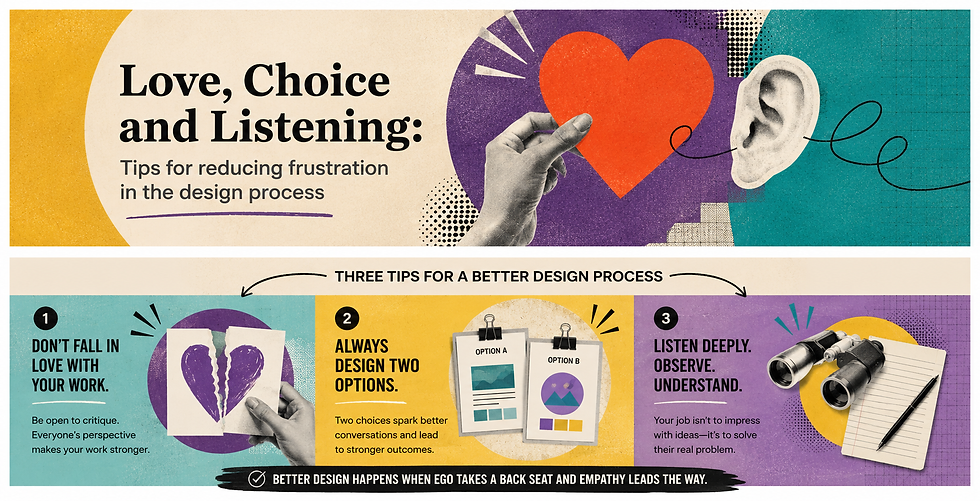
Don’t fall in love with your work
For the creative type that can be easier said than done. But you will find, in the long run, that if you are open to critique and criticism your work will improve. Everyone needs a good editor and if you are open to the feedback of both experts and laymen your perspective will be enhanced along with your talent.
Yes, it does sting a little, especially when you are first starting out, but over time your skin will become thicker.
Always design two options
Not 3 or 15, just two. Too many options can paralyze your decision-maker.
Design two options that you are happy with and proud of. When you present the two options to the customer they may feel like they have some control and voice in the design process leading to increased buy-in. Together you can work through both designs and select the best bits from each.
Designing a second option is also important for stretching yourself as a designer. While you may think the first design was perfect, you may be pleasantly surprised at what you come up with when you force yourself to create a second version.
For more on choosing: Too Many Choices: A Problem That Can Paralyze, written by Alina Tugend and published by The New York Times
LISTEN!
While, your understanding of UX or communications may far exceed theirs, their understanding of the business they run and the needs of their customers far exceeded yours.
If you are the designer, it is your job to create a solution to their problem. Make sure you fully understand the problem and then apply your expert opinion and best practices to that problem.


Comments